
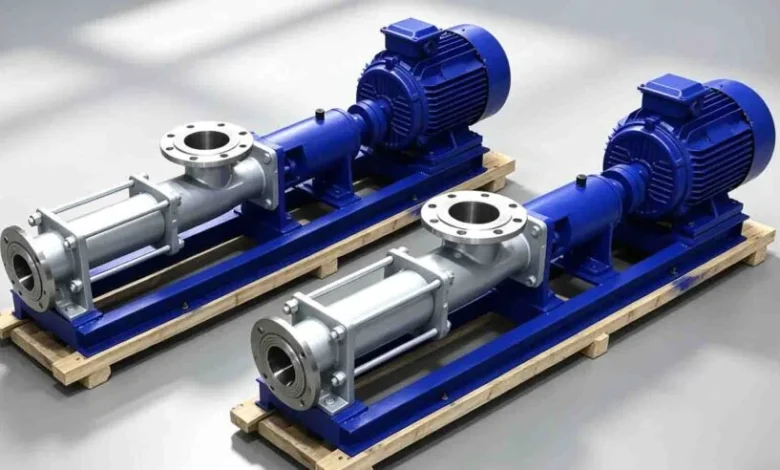
Many industrial operations reach a point where moving high-viscosity fluids efficiently becomes the primary challenge for plant maintenance. A common assumption among facility managers is that the choice between different positive displacement pump designs is purely a matter of preference or cost. In reality, the decision involves nuanced trade-offs in how different mechanical designs handle shear, pressure, and fluid consistency. Recognizing the functional differences between progressive cavity pumps and rotary gear pumps is often the difference between a system that runs for years and one that requires frequent intervention.
Why Fluid Characteristics Dictate Pump Selection
The primary goal in any fluid transfer application is to maintain flow stability without compromising the integrity of the material being moved. A common mistake is selecting a pump based solely on flow rate capacity, while ignoring the physical nature of the substance.
Progressive cavity pumps function through a unique helical rotor rotating within a molded elastomer stator. This design creates a series of sealed cavities that carry fluid from the suction to the discharge side. Because the fluid is essentially “pushed” in a continuous, non-pulsating stream, these pumps are often highly effective for shear-sensitive materials. If an application involves fluids that contain solids or materials that change consistency when agitated, the gentle handling mechanism of this design is frequently a key consideration.
In contrast, rotary gear pumps utilize the interlocking action of precisely machined gears to move fluid. As the gears rotate and disengage, they create a vacuum that draws the liquid into the pump casing, where it is carried around the housing and forced out at the discharge port. This mechanical interaction is typically very efficient at high pressures and is often favored for clean, lubricating fluids. Because the gear-to-gear contact and the tight clearances required for high efficiency tend to create more internal friction, these pumps are sometimes less suitable for abrasive materials, yet they remain a standard choice for tasks involving high-pressure requirements in clean systems.
The Role of Shear Sensitivity and Solid Handling
One of the more helpful ways to distinguish between these two technologies is to evaluate the “how” of their internal movement. A thoughtful assessment of the fluid’s behavior under pressure can guide the choice significantly.
Evaluating Material Handling Requirements
When dealing with delicate fluids—such as certain chemicals, polymers, or food-grade products—the mechanical action of the pump is critical. Progressive cavity pumps are often selected for these tasks because the speed of the pump is directly proportional to the flow rate, and the fluid undergoes very little agitation. This design is generally well-suited for fluids containing soft particles or solids, as the molded stator can typically accommodate debris without locking or damaging the internal surfaces as easily as rigid metal components might.
Conversely, rotary gear pumps operate with very tight tolerances. While this allows for exceptional volumetric efficiency and precise dosing, it also means that particulate matter or abrasive substances can lead to rapid wear. For industrial processes where the fluid is highly refined, such as hydraulic oil or fuel transfer, the precision of a gear-based system is often advantageous. However, for applications where the fluid is heterogeneous, such as slurries or waste streams, the risk of internal wear in a gear system tends to be higher.
Practical Considerations for System Maintenance and Reliability
Reliability in a plant environment is rarely about finding the “best” pump in a general sense; it is about matching the pump’s strengths to the specific reality of the fluid being processed. Facility teams often find that the maintenance cycles for these two systems are fundamentally different due to their wear patterns.
For progressive cavity pumps, the stator is typically considered a wear part. Over time, the elastomer components may degrade or lose their interference fit, leading to a loss of pressure. However, the maintenance process is generally straightforward, often allowing for “in-place” servicing. A maintenance lead should ask whether the pump will be running continuously or if it will be used for intermittent batch processing, as the latter can sometimes cause the stator to dry out or bond if not managed correctly.
Rotary gear pumps require a different approach to upkeep. Since the gears and casing are often metal-on-metal or metal-on-bushing, the primary concern is the cumulative effect of friction. If the fluid being pumped has low lubricity, the internal components may experience faster degradation. Proper maintenance for these units often centers on monitoring internal clearances and ensuring that the suction side remains free of contaminants that could score the gear faces. In many cases, the robust construction of gear systems allows them to handle higher temperatures and pressures with greater longevity, provided the fluid remains free of abrasives.
Reframing the Selection Process for Long-Term Performance
Instead of asking which pump is more common or generally preferred, engineers and maintenance supervisors are better served by evaluating the specific mechanical pressures their process exerts on the fluid.
A useful mental model for selecting between progressive cavity pumps and rotary gear pumps involves three categories of inquiry:
- Fluid Sensitivity: Will the mechanical action of the gears cause the fluid to lose its desired properties, or does the fluid require the steady, low-shear movement of a helical rotor?
- Contaminant Profile: Does the fluid contain suspended solids, grit, or non-homogenous matter that would compromise tight-clearance components?
- Operational Environment: Are the system demands characterized by extremely high discharge pressures, or is the primary goal the constant, steady delivery of a viscous product at moderate pressure?
By focusing on these variables, plant operators move beyond the assumption that one technology is inherently superior. The goal is to reach a stage where the equipment works silently and effectively in the background of the operation. Whether a facility settles on the resilient, gentle movement of the progressive cavity pump or the high-pressure precision of the rotary gear pump, the success of the installation typically comes down to how well the mechanical design aligns with the real-world conditions of the fluid being moved. When these factors are weighed carefully, the resulting system tends to require less troubleshooting and offers more predictable performance across its service life.